An emergency plan is important.
But having a plan and being prepared are not the same thing.
The UK Health Security Agency recently updated its emergency preparedness framework, setting out an approach built around a continuous cycle of identifying risks, assessing readiness, implementing improvements and assessing readiness again.
It reflects a principle that applies far beyond public health:
A plan has to work outside the document
Emergency plans establish responsibilities, procedures, communication routes and expected actions.
That provides the foundation for a response.
The difficulty is that a real incident introduces variables that are difficult to understand from the document alone.
What happens when access to part of the site is blocked?
What happens when additional resources are delayed?
Does everyone understand who is responsible for the next decision?
Can different teams maintain the same understanding of what is happening?
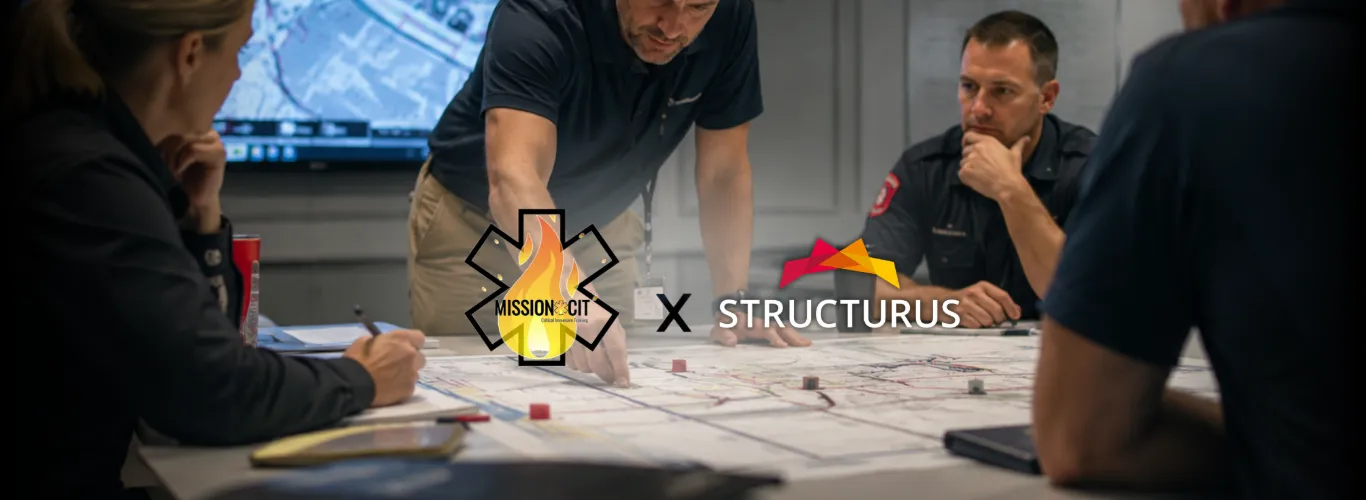
These questions become much clearer when the people responsible for the response actually work through the plan together.
Exercising turns assumptions into observations
Every emergency plan contains assumptions.
Some will prove correct. Others will not.
A structured exercise gives teams an opportunity to find out before those assumptions are tested by a real incident.
Participants can work through the sequence of a response, discuss their actions and see how one decision affects the next.
The purpose is not simply to prove that the plan works.
It is to discover where it does not.
That could mean identifying unclear responsibilities, communication gaps, resource dependencies, operational bottlenecks or actions that looked straightforward when the plan was written but become difficult once the scenario develops.
Identifying a lesson is only the beginning
An exercise is valuable because of what happens after it.
What worked?
What slowed the response?
Which decisions created problems later in the scenario?
What needs to change?
The UKHSA preparedness framework makes an important distinction between lessons identified and lessons learned.
A weakness discovered during an exercise only improves preparedness when something is done about it.
That requires observations to be captured, reviewed and turned into actions while the exercise is still fresh in the minds of those involved.
Faster feedback strengthens the preparedness cycle
This is also where the way tabletop exercises are conducted matters.
When decisions, observations and exercise activity are spread between presentations, handwritten notes and separate documents, producing a useful record of the exercise can become another project in itself.
The longer that process takes, the further the organisation moves from the exercise that generated the lessons.
Digital tabletop exercises can shorten that gap.
STRX Tabletop provides a structured environment for running emergency response exercises while capturing activity throughout the scenario.
Decisions and observations made during the exercise can then feed directly into an automatically generated report.
Instead of spending days reconstructing what happened, teams can move more quickly into reviewing the response and deciding what should change.
Plan. Exercise. Learn. Improve.
Preparedness does not finish when an emergency plan is approved.
The plan should be trained.
It should be exercised.
The response should be reviewed.
And what is learned should influence the next version of the plan.
Then the process begins again.
That continuous cycle is what turns emergency planning into emergency preparedness.
STRX Tabletop helps organisations run structured emergency response exercises, capture what happens and generate the exercise report automatically.
Try STRX Tabletop at structurus.com.
For more information, contact info@structurus.com.