Oil and Gas
Is your storage tank protected?
Protecting tank terminals, refineries, and storage depots with a first line of attack rim seal fire protection system
DEVELOPED SPECIFICALLY FOR FLOATING ROOF TANKS
The CFI rim seal fire protection system protects internal and external rim seal areas in live storage tanks, not requiring hot work and no need to take tanks out of service.
COMBINED DETECTION & EXTINGUISHMENT
No need for a separate detection system, the CFI system comprises a fast-acting thermosensitive glass bulb sprayer and detector which detects incipient fires in seconds and discharges the extinguishing media automatically with no human involvement. This system has proven to be much more robust than standard linear heat detection systems.
MITIGATES RISK
Unlike conventional systems, the CFI system automatically detects and extinguishes fires in floating roof tanks within seconds thus eliminating risks and saving owners hundreds of thousands of dollars.
Why Protect Against Rim-Seal Fires?
Floating roof tank fires are one of the most dangerous hazards for crude oil and petrochemical storage farms. In several cases, these incidents have escalated into major disasters when intense heat from a fire has caused loss of stability in the tank shell, causing the roof to sink under the tank contents and resulting in a full surface tank fire. Industry articles suggest that 33% of fires in open floating roof tanks start in the seal area between the floating roof and the tank wall. Lightning strikes are seen as the frequent source for such fires in refineries and storage tank terminals, but any circumstances where vapours leak through the circumferential seal or create an explosive mixture in the space above the liquid can result in static electricity or another source of ignition that starts a fire.
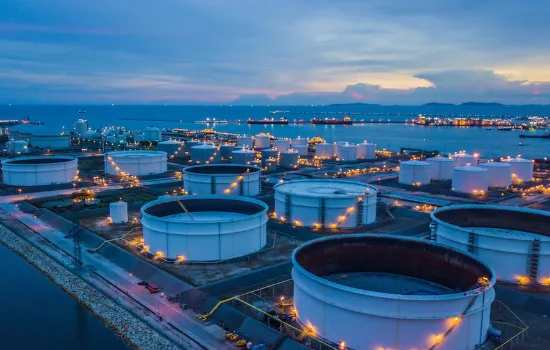
Tank Terminals
Rim seal fire protection systems are excellent solutions for oil companies to help them eliminate risks of rim seal fires or full surface storage tank fires. By addressing these risks early and efficiently without the need for human intervention, threats can be significantly reduced, and fires brought under control in a matter of seconds.
Our Clients


Virtual Simulation
Take a look at our past experience below.
Case Studies
What Happens When the Main Emergency Access Route Is Blocked...
Emergency response plans usually define how responders reach the incident. A useful exercise tests what happens when that route cannot be used. Read More
Posted on Oct 15,2026
What One Tank Farm Exercise Actually Revealed
A realistic scenario does not need dozens of complications. It needs the right ones, introduced at the right time. Read More
Posted on Sep 24,2026
What Happens When the Person Who Knows the Emergency Plan Is...
Most organisations have someone who knows the site better than everyone else. Read More
Posted on Sep 17,2026
One Incident, Different Priorities
A real emergency does not create one problem. It creates several problems at once, often for teams with very different responsibilities. Read More
Posted on Sep 10,2026
Preparedness Is a Cycle, Not a Document
Emergency plans have to be exercised. Read More
Posted on Sep 03,2026
Your Emergency Plan Is Full of Dependencies. Are You Testing...
An emergency plan rarely depends on one action. It depends on communications working, site access remaining available, equipment being operational, staff being present and outside support arriving when expected. That creates dependencies. A tabletop exercise should test them. Read More
Posted on Aug 20,2026GET IN TOUCH
Structurus 2026 © All Rights Reserved | Developed By Internative